

Technical SEO Checklist: 25+ Essential Checks for Better Rankings
- Kruti Varma /
- 2026-09-08 /
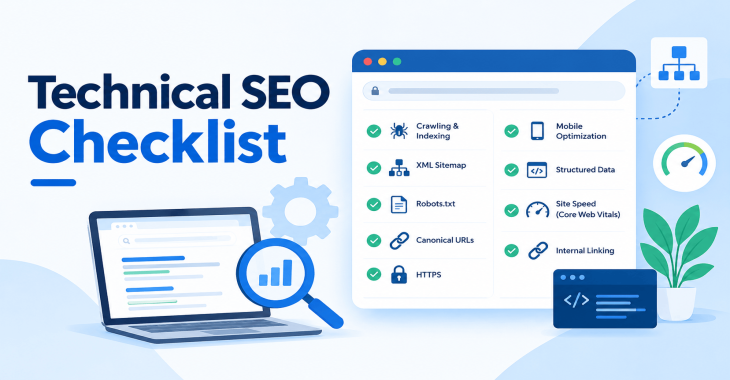
A solid technical SEO checklist helps search engines crawl, index, and understand your site more effectively. This guide covers more than 25 essential checks you should perform to improve crawlability, indexability, and user experience.
A focused technical SEO checklist keeps pages fast, accessible, and structured for search engines. Use it as a living document: run through it regularly and track improvements over time.
1) Crawlability and Indexability
Ensuring search engines can reach and index your content is foundational.
- Robots.txt: Verify the file exists, is accessible, and blocks only what you intend.
- Crawl budget awareness: Prioritize important pages and fix bottlenecks that cause excessive crawling of low-value pages.
- XML sitemaps: Submit a clean sitemap to Google Search Console and Bing Webmaster Tools; include only canonical URLs with up-to-date timestamps.
- Noindex on duplicates: Remove or consolidate duplicate pages; use canonical links to point to the primary version.
- 404 and 410 handling: Return proper status codes for missing pages and guide users with helpful error pages.
READ MORE: SEO Audit for Small Business: Complete Step-by-Step Guide
2) Site Architecture and Internal Linking
A clear structure helps both users and search engines discover content efficiently.
- Hierarchical navigation: Keep a shallow depth (top-level sections within 3 clicks) to important pages.
- Internal link strategy: Use descriptive anchor text and link to related content to spread authority.
- Flat category pages: Avoid deep nesting for blog posts and product pages; group related items together.
- Redirect map: Maintain a record of all redirects to prevent chains and loops.
- Orphaned pages: Identify pages with no internal links and fix or remove them.
3) URL Hygiene
Clean, descriptive URLs improve crawlability and user trust.
- Canonical URLs: Ensure canonical tags point to the preferred version to avoid duplicate content.
- Static URLs: Prefer readable, hyphen-separated slugs over dynamic parameters where possible.
- Consistent trailing slashes: Pick a convention and apply it site-wide.
- URL parameters: Use Google Search Console’s URL Parameter Tool carefully; avoid parameter proliferation that creates duplicate content.
- HTTPS everywhere: Ensure all pages load securely with valid certificates.
4) Core Web Vitals and Page Experience
Performance and UX signals influence rankings and click-through rates.
- Largest Contentful Paint (LCP): Optimize the loading of the main content; target under 2.5 seconds where feasible.
- First Input Delay (FID): Minimize main-thread work; defer non-critical scripts.
- Cumulative Layout Shift (CLS): Reserve space for images and embeds; avoid layout shifts during loading.
- CLS with third-party scripts: Audit third-party widgets; lazy-load or remove if not essential.
- Mobile experience: Ensure responsive design, touch-friendly targets, and legible text on small screens.
READ MORE: SEO Checklist for New Website: 25+ Steps to Rank on Google
5) Core Technical On-Page Signals
On-page structure supports search engines in understanding page topics.
- Title tags: Craft unique, descriptive titles with primary keywords without stuffing.
- Meta descriptions: Write concise summaries that encourage clicks; avoid duplications.
- Headings: Use a clear H1 per page, followed by logical H2s and H3s to segment content.
- Structured data: Implement schema.org where applicable (articles, products, FAQs) to enhance rich results.
- Image optimization: Use descriptive alt text, proper file names, and lossless compression.
6) Canonicalization and Duplicate Content
Prevent confusion over multiple URLs representing the same content.
- Rel-canonical implementation: Point canonical URLs to the preferred version consistently.
- Duplicate content checks: Audit for near-duplicates across pages and consolidate when possible.
- Session IDs and tracking parameters: Exclude them from indexing by controlling crawling and using canonical tags.
7) International and Language Settings
If you serve multiple regions or languages, get international SEO right.
- hreflang annotations: Implement self-referential hreflang and cross-language links to corresponding pages.
- URL strategy for global sites: Use region-specific subdirectories, subdomains, or URL parameters consistently.
- Language root pages: Provide language-appropriate content and structure on every variant.
READ MORE: On-Page SEO Checklist: 25+ Steps to Optimize Your Website
8) Indexing Controls and Pagination
Handle large catalogs and media libraries without harming indexing.
- Pagination handling: Use rel="next" and rel="prev" where appropriate; ensure paginated content is accessible.
- Infinite scroll: Implement a crawlable, server-rendered pattern or a clear paginated fallback.
- Rich media indexing: Ensure images, videos, and PDFs are crawlable and indexed when relevant.
- Noindex for low-value pages: Exclude thin or duplicate pages from indexing to focus crawl resources.
9) Security and Accessibility
A secure, accessible site earns user trust and better crawl efficiency.
- TLS/SSL: Maintain up-to-date certificates and enforce HTTPS across all pages.
- Accessibility basics: Use semantic HTML, alt attributes, proper landmark roles, and keyboard navigability.
- Error handling: Provide accessible error pages and clear navigation back to functional areas.
10) Server Performance and Infrastructure
Infrastructure choices influence crawl speed and user experience.
- Server response time: Aim for a fast server response; optimize backend processing and database queries.
- Caching strategy: Implement browser, CDN, and server-side caching where appropriate.
- Compression: Enable Gzip or Brotli to reduce response sizes.
- HTTP/2 or HTTP/3: Prefer modern protocols to improve parallelism and speed.
- Uptime and monitoring: Track downtime and incident response to minimize site-wide outages.
11) Content Delivery and Media
Media handling affects load times and indexing.
- Image optimization: Compress images, serve next-gen formats (WebP/AVIF where supported), and size images to display dimensions.
- Video hosting: Use efficient hosting, transcripts, and structured data for video content.
- PDF and large assets: Provide text-extracted versions or HTML summaries when feasible.
- Lazy loading: Implement lazy loading for off-screen images to improve initial paint.
12) Logging and Telemetry
Data-driven insights guide ongoing optimization.
- Server logs: Analyze crawl activity, error rates, and resource usage.
- Search console data: Monitor impressions, clicks, and crawl errors; address spikes promptly.
- Analytics alignment: Ensure tracking does not hinder performance or block crawlers.
READ MORE: SEO-Friendly URL Structure: Best Practices & Examples
13) Content Hygiene and Signals
Technical health complements content quality for rankings.
- Thin content checks: Identify pages with little output and either improve or remove.
- Content freshness: Update older, valuable content to reflect current information.
- Duplicate media: Ensure images and videos used on multiple pages are properly managed to avoid duplication.
14) Platform and CMS Considerations
CMS choices impact scalability and maintenance.
- Plugins and extensions: Audit for unnecessary or outdated components that could slow the site.
- Core updates: Keep the CMS core and plugins updated to reduce security and performance risks.
- Structured data plugins: Use vetted tools for implementing schema markup without code bloat.
15) Local SEO Signals (If Applicable)
Local signals require precise validation.
- NAP consistency: Ensure name, address, and phone number are uniform across pages and listings.
- Local business schema: Apply appropriate local business and service-area schema on relevant pages.
- Google My Business linking: Keep business information current and linkable from site to local profiles.
READ MORE: Google Business Profile Optimization Guide (2026): Proven Tips to Rank #1 on Google Maps
16) International Tracking and Analytics
Accurate analytics support optimization.
- Filtered views: Use proper view settings to avoid internal traffic skewing data.
- Cross-domain tracking: Implement seamless session stitching if multiple domains exist.
- Data privacy and consent: Align with privacy laws and implement consent mechanisms without obstructing essential scripts.
17) Logging and Error Pages
Inform users and search engines when something goes wrong.
- Custom 404 pages: Provide helpful navigation and search tools to recover user intent.
- Redirect hygiene: Minimize chains and loops; fix broken redirects promptly.
- Server error monitoring: Track 5xx errors and address underlying causes quickly.
18) Accessibility and UX Testing
Consistent testing protects long-term performance.
- Keyboard navigation: Verify all interactive elements can be reached and used with a keyboard.
- Focus indicators: Ensure visible focus styling for interactive controls.
- Readability: Use legible font sizes and contrast ratios for content.
19) Content Indexability and Rich Results
Maximize visibility in search results through structured content.
- FAQ schema: Use FAQPage markup for pages with question-and-answer sections.
- How-to and Recipe schema: Enhance content where applicable with step-by-step instructions.
- Product schema: Annotate product details, pricing, and availability for ecommerce pages.
READ MORE: SEO Internal Linking Strategy: A Complete Guide to Internal Links
20) Technical Maintenance and Audits
Regular audits prevent long-term issues.
- Baseline audit: Run a full technical SEO audit quarterly and after major site changes.
- Change control: Document fixes and track their impact on rankings and traffic.
- Tooling: Use a mix of crawl tools, log analysis, and performance testing to cover all bases.
21) International and Content Localization
Localization affects user relevance and crawl patterns.
- Localized URLs: Maintain consistent language and region identifiers in URL structures.
- Language-specific sitemaps: If needed, submit separate sitemaps for language variants to search engines.
- Local user signals: Align content to regional interests without duplicating global content.
22) Redirect Management and Migration Planning
Migrations demand careful planning to preserve rankings.
- URL migration plan: Create a mapped guide from old URLs to new ones before changes.
- Redirect types: Prefer 301s for permanent moves; avoid meta refresh redirects.
- Post-migration validation: Check for broken links, crawl errors, and index status after changes.
READ MORE: Topical Authority in SEO: What It Is & How to Build It?
23) Analytics-Driven Optimization
Tie technical health to measurable outcomes.
- Crawl rate and index status: Monitor changes in index coverage after fixes.
- Page speed impact: Correlate performance improvements with user engagement metrics.
- Conversion implications: Track how technical improvements influence conversion paths.
24) Data Structures and Semantic Integrity
Structured data and topic modeling aid understanding.
- Topic clustering: Internally structure content around primary themes with clear hierarchies.
- Entity mentions: Use consistent naming for brands, products, and topics to reinforce relevance.
- Schema completeness: Ensure required fields are present for each schema type used.
25) Documentation and Governance
Maintain a living, actionable technical SEO playbook.
- Accessibility and performance standards: Document standards and acceptance criteria.
- Change log: Keep a record of all technical decisions and their outcomes.
- Ownership: Assign owners for each area of the checklist to ensure accountability.
READ MORE: How Long Does SEO Take? A Realistic Timeline for SEO Results
26) Practical Workflow Tips
- Start with a health check: Run a baseline crawl and indexing report to identify the biggest blockers.
- Triage fixes: Separate issues into critical, high, and moderate, and address critical ones first.
- Schedule recurring audits: Implement quarterly reviews to catch new issues early.
- Use dashboards: Create executive-friendly dashboards focusing on core signals like crawlability, speed, and index status.
27) Sample Checklists You Can Use
- Crawlability: Robots.txt, sitemap, 404 handling, redirects, and index status.
- Speed: LCP, CLS, FID; optimize images, server response, and third-party scripts.
- Structure: Title tags, meta descriptions, headings, canonical tags, and structured data.
- Accessibility: Alt text, semantic HTML, keyboard navigation, and color contrast.
- Security: HTTPS everywhere, certificate validity, and protection against mixed content.
READ MORE: SEO Mistakes to Avoid: 15 Common SEO Errors That Hurt Rankings
Conclusion or Takeaways
A solid technical SEO checklist covers crawlability, indexability, performance, and structure. Regular audits and disciplined governance help maintain healthy rankings and a strong user experience.
Recent Blogs
-
Keyword Clustering SEO: How to Group Keywords for Better Rankings
Posted ::2026-09-12
-
SEO Audit Checklist: 50+ Steps to Audit Your Website
Posted ::2026-09-11
-
SEO Content Strategy: A Step-by-Step Guide to Higher Rankings
Posted ::2026-09-10
-
SEO for Beginners: A Complete Guide to SEO Basics
Posted ::2026-09-09
-
Technical SEO Checklist: 25+ Essential Checks for Better Rankings
Posted ::2026-09-08


Our FAQ’s
What is digital marketing?
Digital marketing involves marketing to people using Internet-connected electronic devices, namely computers, smartphones and tablets. Digital marketing focuses on channels such as search engines, social media, email, websites and apps to connect with prospects and customers.
What does a digital marketer do?
Digital marketing has evolved to the point where an immense array of specialists consult with brands to develop effective strategies or implement programs. If you’re new to digital marketing, or lack experience or resources, you should consider engaging an experienced and versatile digital marketing consultant.
Would my business benefit from digital marketing?
Definitely. Though companies in many business categories continue to approach digital marketing with skepticism, avoiding digital marketing denies your business access to the media the majority of consumers turn to first and at all hours of the day.
What’s the biggest mistake digital marketers make?
Blowing their own horn. Yes, of course, the primary goal of marketing is to create leads. However, in the age of digital media a brand-centric, salesy approach deflects interest in your company. Make your marketing customer-centric. Second biggest mistake: Far too often, digital marketers start and stop. You need to contribute a steady flow of content to the channels you use.
How often should I update my website?
Websites that go for long periods with no updates and new content are unlikely to perform well or support any useful digital marketing objectives. Though a static website technically qualifies as a website it’s bound to be more than a digital brochure that produces little or no leads.
What do I need to know about mobile?
Mobile phones are the most used technology in the world. Most of your prospects spend the majority of their media time—and hours—using a smartphone. Mobile marketing focuses on mobile strategies like messaging, mobile applications, and mobile websites. A brand that ignores mobile marketing is doomed.
What is content marketing?
Content marketing is the creation and distribution of educational and/or entertaining information assets for the purpose of generating brand awareness, traffic, leads and sales. Marketing content is generally free and does not explicitly promote your brand as an ad would.
What’s involved in creating a content marketing strategy?
A content marketing strategy is a plan for building an audience. Elements of content marketing strategy include establishing objectives, audience personas, a value proposition, content marketing mission statement, a buyer journey map, and plans for creating, promoting and analyzing how content marketing assets and programs perform.
Do I need a blog?
Email, social media, search and other elements of your digital marketing mix will depend on delivering useful content. Though video outlets, podcasts, and media galleries present other options, a blog is by far the most used tactic for distributing marketing content on a channel over which you have complete control.
What content should we create?
There can be no all-encompassing answer to this question except to say you should create content buyers will find relevant and useful. Leading candidates include blog posts, articles, ebooks, infographics, microsites, videos, courses, case studies, newsletters, visuals and various forms of interactive content.
What is SEO?
Search engine optimization (SEO) is the process of using onsite and offsite tactics to help get content presented by a search engine. Done well, the practice increases the quantity and quality of your traffic.
Why is SEO important?
The majority of web traffic is generated by search and those that come by way of search have a greater degree of commercial intent than most other channels.
What is local SEO?
Local SEO is the process of optimizing your online properties to generate traffic from location-based searches. It helps businesses promote products and services to local customers when they need them.
What are keywords?
Keywords are the words and phrases searchers use—usually with search engines—to find relevant pages, images, videos, or any kind of information when looking for answers, knowledge, products, or services. SEO professionals consider keywords and the topics they suggest when optimizing content for search.
What determines search engine rankings?
This question is the source of endless speculation and debate because search engine companies such as Google will not answer it. Experts generally agree rankings are based on relevance and authority, but the factors that determine them are many—and inconsistent. The best way to achieve a high search engine ranking is to create one of the most thorough web pages possible for a specific keyword or topic.
What is PPC?
PPC stands for pay-per-click. Essentially, it’s a way of buying web traffic. Advertisers pay a fee each time one of their ads is clicked. Search engine advertising is the most popular form of PPC, however numerous channels including Facebook now offer PPC ad models.
Why is social media important?
Chances are your audience is active on one or more of the major social networks where billions of people spend time daily. Brands that understand the power of social media marketing and commit resources to it can boost awareness, drive traffic, interact with customers, drive sales, build loyalty, and win advocates.
What is a lead magnet?
A lead magnet is a free offer you make in exchange for an email address (and possibly additional information). The purpose is to inspire prospects to join your email list by offering something of value. Examples include an ebook, guide, report, assessment, cheat sheet, tool, template, webinar, course, or a coupon.
What is a call to action?
A call to action (CTA) is a prompt that instructs the viewer to take a specific action. A call to action is typically written as a command, such as “Buy Now.” In digital marketing a CTA generally takes the form of a button or link.
How long does it take to see results?
Paid digital marketing programs should create results immediately. On the other hand, programs such as content marketing, email list building, and search engine optimization require persistence and patience. You might see some results in a matter of months; however, it’s likely to be six months to a year before you realize some of your traffic and conversion objectives.