

SEO Internal Linking Strategy: A Complete Guide to Internal Links
- Kruti Varma /
- 2026-09-05 /
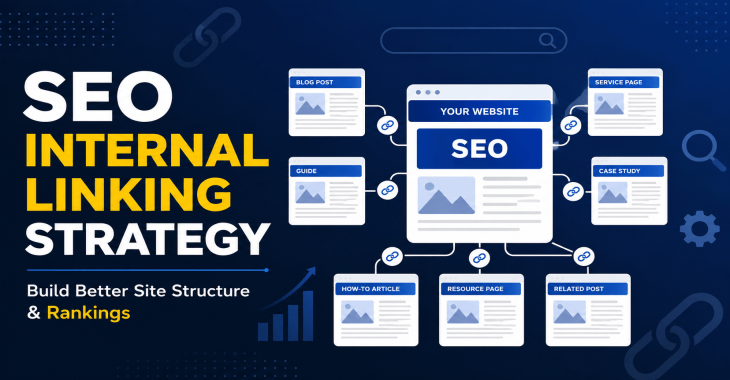
Internal linking is a core on-page technique that guides both users and search engines through your site. A solid strategy helps distribute authority, improves crawlability, and clarifies site structure. This guide covers practical approaches to building and maintaining effective internal links within the framework of SEO Internal Linking.
A well-planned internal linking strategy starts with your site’s architecture and continues through every page you publish. You’ll learn how to map internal links to user intent, how to use anchor text wisely, and how to measure impact without overcomplicating your workflow.
This article emphasizes actionable steps you can apply right away, without relying on questionable tactics or dubious statistics. Focus on clarity, relevance, and consistent execution.
READ MORE: SEO Checklist for New Website: 25+ Steps to Rank on Google
What internal linking does for SEO Internal Linking?
Internal links serve multiple purposes beyond navigation. They help search engines understand which pages matter most and how content relates to each other.
- Discoverability: Link paths act as routes for crawlers to find new content.
- Distribution of authority: Strategic links spread page authority to important pages.
- Context and relevance: Linking signals help determine topic clusters and relevance to user queries.
When you plan for SEO Internal Linking, think about both user experience and search engine intent. A good internal linking schema aligns with your content taxonomy and the keywords you target.
Site architecture and hierarchy
A clear hierarchy makes internal linking more effective. Start with a top-level navigation that reflects your core topics, then create category pages that aggregate related posts.
- Define pillars: Identify 3–5 cornerstone topics that represent your site’s main themes.
- Create hub pages: Each pillar gets a hub page that links to supporting articles.
- Use breadcrumb trails: Breadcrumbs reinforce hierarchy and provide additional internal links.
Your internal links should mirror this structure. As you publish new content, place links from top-level pages to relevant subtopics, and from those subtopics back to the pillar hubs when appropriate.
Crafting anchor text for internal links
Anchor text conveys context to readers and signals relevance to search engines. Keep anchor text descriptive, not generic.
- Prefer specific phrases: Use anchor text that reflects the page topic rather than a generic “click here.”
- Maintain variety: Use a mix of exact-match keywords, partial matches, and natural variations.
- Avoid over-optimization: Don’t force a keyword into every link; balance is key.
In the context of SEO Internal Linking, anchor choices should reflect the relationship between linked pages. A well-chosen anchor helps users anticipate what they’ll read next.
READ MORE: On-Page SEO Checklist: 25+ Steps to Optimize Your Website
Linking from old content to new content
Continuously refreshing your internal link structure keeps it healthy. When you publish new content, review relevant older posts and add links where they fit naturally.
- Update opportunity: Identify evergreen posts that can serve as gateways to newer material.
- User flow improvement: Create logical paths that guide readers deeper into your content library.
- Link equity refresh: Re-link strategically to distribute authority toward newer or high-priority pages.
Process tip: maintain a running list of pages that would benefit from updated linking and revisit quarterly.
Linking within the content
In-content links are often the most effective way to guide readers. Place internal links where the reader’s attention is high and the topic is clearly related.
- Proximity matters: Link near relevant passages where the user is already engaged.
- Context over quantity: A handful of highly relevant links per article beat a dozen generic mentions.
- Link to alternatives: When detailing a topic, offer readers related angles or deeper dives with internal links.
When performing SEO Internal Linking, resist the urge to insert links merely for SEO effects. Relevance should drive every placement.
Using navigation and sitemap links wisely
Site-wide navigational elements and XML sitemaps support discovery, but they have different roles.
- Global navigation: Use for broad topic access, not for deep linking to every article.
- Footer links: Useful for policy pages or high-priority pages that deserve persistent visibility.
- XML sitemaps: Ensure crawlable access to all important pages, but do not rely on sitemaps to replace in-content linking.
Balance is essential. Rely on in-content links for context and navigation links for structure.
READ MORE: How to Do SEO for a Website: A Step-by-Step Guide
Internal linking for topic clusters
Topic clustering organizes content into interconnected groups. This approach enhances SEO Internal Linking by signaling authority around core topics.
- Pillars and clusters: Create pillar pages that cover a broad topic and cluster articles that drill into subtopics.
- Cross-link within clusters: Ensure each cluster page links to related articles within the same topic area.
- Inter-cluster linking: Add limited cross-links where relevant to show broader connections, but avoid excessive cross-linking that dilutes focus.
A well-implemented cluster strategy improves crawl efficiency and helps search engines understand page relationships.
Technical considerations for internal linking
Technical factors impact how links behave and how search engines process them.
- Link depth: Aim for most important pages to be reachable within 3–4 clicks from the homepage.
- No-follow and do-follow: Use no-follow sparingly; for internal links, keep them do-follow unless you have a specific reason to restrict.
- Redirects: If you update URLs, set up 301 redirects thoughtfully to preserve internal link equity.
- Linking across languages or regions: Use hreflang and regional subdirectories consistently to maintain proper relevance.
Regular audits help identify broken links, orphaned pages, and outdated anchor text.
Measuring impact without vanity metrics
Track the effectiveness of your SEO Internal Linking with practical metrics.
- Crawlability and depth: Use site crawlers to identify crawl errors and pages that are hard to reach.
- Page authority distribution: Monitor how link equity flows to pillar pages versus supporting articles.
- User engagement signals: Observe bounce rate, time on page, and navigation depth to ensure readers are following logical paths.
- Conversion pathways: Map internal links to conversion goals to measure assisted conversions.
Avoid chasing vague metrics. Focus on changes that improve navigation, relevance, and authority distribution.
Common mistakes and how to fix them
Even well-intentioned strategies can stumble. Here are frequent issues and practical fixes.
- Over-linking: Limit internal links per page to a reasonable number (often 3–6 per long article). Keep links relevant and contextual.
- Irrelevant anchors: Ensure anchor text matches the linked page’s topic. Rework or remove mismatched links.
- Dead-end pages: Add internal links to related content or to pillar pages to improve crawlability and user flow.
- Orphan pages: Identify pages with no internal links pointing to them and integrate them into appropriate clusters.
A proactive maintenance approach reduces friction for both users and search engines.
READ MORE: SEO Mistakes to Avoid: 15 Common SEO Errors That Hurt Rankings
International and multilingual considerations
If your site serves multiple languages or regions, tailor internal linking to preserve language context.
- Language-specific hubs: Create separate pillar pages for each language and link to corresponding content within the same language.
- URL structure consistency: Maintain consistent patterns (e.g., /en/ vs /fr/) so crawlers can correctly interpret regional relevance.
- Hreflang coordination: Align internal links with hreflang signals to avoid confusing search engines about language targeting.
Applying consistent internal linking rules across languages strengthens overall SEO Internal Linking.
Practical workflow for teams
A repeatable process keeps internal linking effective as you publish more content.
1. Content planning: Define pillar topics and potential cluster themes before writing.
2. Drafting: Create content with intent to link to related posts. Mark potential anchor phrases during drafting.
3. Review: Conduct a link audit during editing to verify relevance and prevent over-linking.
4. Publish: Ensure internal links render correctly and accessibility considerations are met.
5. Monitor: Regularly audit for broken links and outdated anchors; refresh as needed.
Assign ownership for ongoing internal linking maintenance to ensure consistency.
Tools that support internal linking
Several tools help organize internal linking work without injecting guesswork.
- Content inventories: Maintain lists of pillar pages, clusters, and related posts.
- Audit tools: Regularly scan for broken links and orphaned pages.
- Visualization aids: Map site structure to visualize link flows and identify gaps.
- Analytics integration: Tie internal link changes to engagement and conversion metrics.
Choose tools that fit your team size and workflow. The goal is to make the process repeatable, not overly complex.
Implementation checklist for SEO Internal Linking
- Define 3–5 pillar topics and build hub pages for each.
- Create topic clusters with 4–8 supporting articles per pillar.
- Audit existing content for relevant internal links; add where missing.
- Optimize anchor text for relevance, diversity, and natural use.
- Ensure most important pages are within 3–4 clicks from the homepage.
- Avoid over-linking; maintain user-focused relevance for every link.
- Regularly crawl and fix broken links; monitor anchor text drift.
- Align internal linking with regional or language targets if applicable.
Following this checklist keeps the internal linking program focused and measurable.
READ MORE: How to Improve Organic Traffic: 15 Proven SEO Strategies
Takeaways
A robust SEO Internal Linking strategy strengthens site structure, improves crawlability, and enhances topical authority. By aligning links with user intent and maintaining a disciplined workflow, you enable readers to discover more content while signaling clear relationships to search engines. Implement pillar-and-cluster models, optimize anchor text with care, and conduct periodic audits to sustain performance.
Recent Blogs
-
Why Is My Website Page Not Indexed by Google? 12 Reasons & How to Fix It
Posted ::2026-09-24
-
How to Request Indexing of a Website Page on Google?
Posted ::2026-09-19
-
Google Search Console Guide 2026: Complete Beginner’s Guide
Posted ::2026-09-18
-
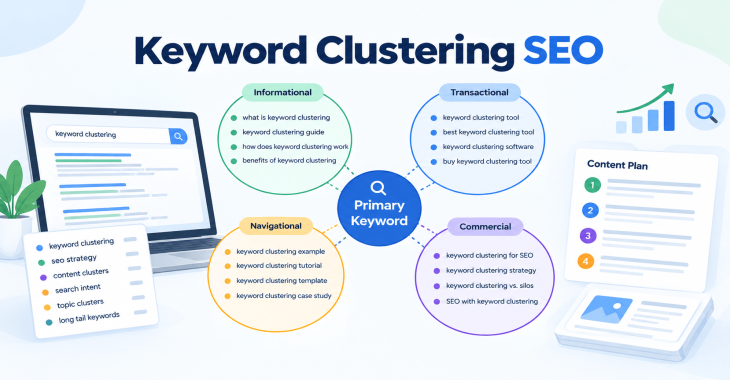
Keyword Clustering SEO: How to Group Keywords for Better Rankings
Posted ::2026-09-12
-
SEO Audit Checklist: 50+ Steps to Audit Your Website
Posted ::2026-09-11


Our FAQ’s
What is digital marketing?
Digital marketing involves marketing to people using Internet-connected electronic devices, namely computers, smartphones and tablets. Digital marketing focuses on channels such as search engines, social media, email, websites and apps to connect with prospects and customers.
What does a digital marketer do?
Digital marketing has evolved to the point where an immense array of specialists consult with brands to develop effective strategies or implement programs. If you’re new to digital marketing, or lack experience or resources, you should consider engaging an experienced and versatile digital marketing consultant.
Would my business benefit from digital marketing?
Definitely. Though companies in many business categories continue to approach digital marketing with skepticism, avoiding digital marketing denies your business access to the media the majority of consumers turn to first and at all hours of the day.
What’s the biggest mistake digital marketers make?
Blowing their own horn. Yes, of course, the primary goal of marketing is to create leads. However, in the age of digital media a brand-centric, salesy approach deflects interest in your company. Make your marketing customer-centric. Second biggest mistake: Far too often, digital marketers start and stop. You need to contribute a steady flow of content to the channels you use.
How often should I update my website?
Websites that go for long periods with no updates and new content are unlikely to perform well or support any useful digital marketing objectives. Though a static website technically qualifies as a website it’s bound to be more than a digital brochure that produces little or no leads.
What do I need to know about mobile?
Mobile phones are the most used technology in the world. Most of your prospects spend the majority of their media time—and hours—using a smartphone. Mobile marketing focuses on mobile strategies like messaging, mobile applications, and mobile websites. A brand that ignores mobile marketing is doomed.
What is content marketing?
Content marketing is the creation and distribution of educational and/or entertaining information assets for the purpose of generating brand awareness, traffic, leads and sales. Marketing content is generally free and does not explicitly promote your brand as an ad would.
What’s involved in creating a content marketing strategy?
A content marketing strategy is a plan for building an audience. Elements of content marketing strategy include establishing objectives, audience personas, a value proposition, content marketing mission statement, a buyer journey map, and plans for creating, promoting and analyzing how content marketing assets and programs perform.
Do I need a blog?
Email, social media, search and other elements of your digital marketing mix will depend on delivering useful content. Though video outlets, podcasts, and media galleries present other options, a blog is by far the most used tactic for distributing marketing content on a channel over which you have complete control.
What content should we create?
There can be no all-encompassing answer to this question except to say you should create content buyers will find relevant and useful. Leading candidates include blog posts, articles, ebooks, infographics, microsites, videos, courses, case studies, newsletters, visuals and various forms of interactive content.
What is SEO?
Search engine optimization (SEO) is the process of using onsite and offsite tactics to help get content presented by a search engine. Done well, the practice increases the quantity and quality of your traffic.
Why is SEO important?
The majority of web traffic is generated by search and those that come by way of search have a greater degree of commercial intent than most other channels.
What is local SEO?
Local SEO is the process of optimizing your online properties to generate traffic from location-based searches. It helps businesses promote products and services to local customers when they need them.
What are keywords?
Keywords are the words and phrases searchers use—usually with search engines—to find relevant pages, images, videos, or any kind of information when looking for answers, knowledge, products, or services. SEO professionals consider keywords and the topics they suggest when optimizing content for search.
What determines search engine rankings?
This question is the source of endless speculation and debate because search engine companies such as Google will not answer it. Experts generally agree rankings are based on relevance and authority, but the factors that determine them are many—and inconsistent. The best way to achieve a high search engine ranking is to create one of the most thorough web pages possible for a specific keyword or topic.
What is PPC?
PPC stands for pay-per-click. Essentially, it’s a way of buying web traffic. Advertisers pay a fee each time one of their ads is clicked. Search engine advertising is the most popular form of PPC, however numerous channels including Facebook now offer PPC ad models.
Why is social media important?
Chances are your audience is active on one or more of the major social networks where billions of people spend time daily. Brands that understand the power of social media marketing and commit resources to it can boost awareness, drive traffic, interact with customers, drive sales, build loyalty, and win advocates.
What is a lead magnet?
A lead magnet is a free offer you make in exchange for an email address (and possibly additional information). The purpose is to inspire prospects to join your email list by offering something of value. Examples include an ebook, guide, report, assessment, cheat sheet, tool, template, webinar, course, or a coupon.
What is a call to action?
A call to action (CTA) is a prompt that instructs the viewer to take a specific action. A call to action is typically written as a command, such as “Buy Now.” In digital marketing a CTA generally takes the form of a button or link.
How long does it take to see results?
Paid digital marketing programs should create results immediately. On the other hand, programs such as content marketing, email list building, and search engine optimization require persistence and patience. You might see some results in a matter of months; however, it’s likely to be six months to a year before you realize some of your traffic and conversion objectives.