

Keyword Clustering SEO: How to Group Keywords for Better Rankings
- Kruti Varma /
- 2026-09-12 /
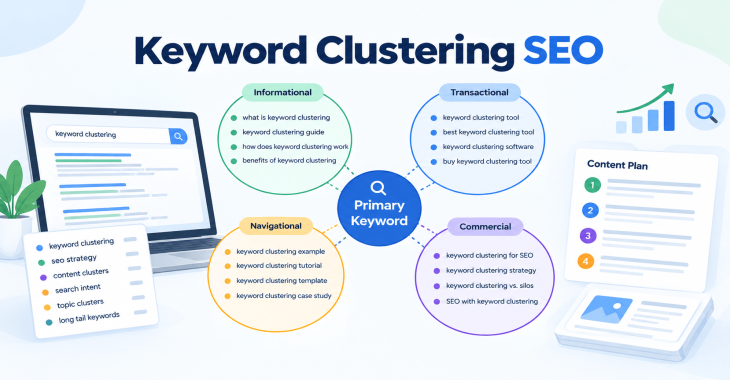
Keyword clustering SEO is the practice of organizing keywords into meaningful groups so you can craft targeted content that ranks more efficiently. The goal is to align user intent with content topics, reducing cannibalization and improving overall topical authority. When done well, clustering helps search engines understand your pages and boosts relevance signals across your site.
This article walks through practical steps to build an effective keyword clustering SEO strategy. You’ll learn how to collect, clean, and group keywords, plus how to map clusters to content plans and on-page optimization.
What keyword clustering SEO Actually Delivers?
- Clarifies intent: Grouping by intent helps you create content that precisely answers user questions.
- Improves content coverage: Clusters reveal gaps in your topic coverage, guiding new pages or updates.
- Reduces internal competition: Clear clusters prevent keyword cannibalization by prioritizing one page per core topic.
- Enhances internal linking: Structured clusters support a logical linking strategy that boosts authority distribution.
Understanding the mechanics of clustering sets the stage for scalable SEO work. It’s not just about keyword volume; it’s about organizing topics in a way that aligns with how users search.
READ MORE: Keyword Research for Beginners: A Complete Step-by-Step Guide
How to Gather Keywords for Clustering?
Step 1: Seed your topic map
- Start with core topics relevant to your niche.
- Compile a list of seed keywords for each topic, including variations and synonyms.
- Capture user intent signals: informational, navigational, transactional, and commercial investigation.
Step 2: Expand with data sources
- Use keyword research tools to pull related queries and autocomplete suggestions.
- Analyze competitor pages to identify gaps in your own coverage.
- Include long-tail phrases that reflect specific user needs.
Step 3: prune and normalize
- Remove duplicates and low-value terms (e.g., brand names unless relevant to the topic).
- normalize phrasing: group synonyms under a single canonical term when they describe the same intent.
- tag terms by intent and priority to simplify later steps.
Designing a Practical Clustering Framework
Core principles
- One topic, one cluster: Each cluster should cover a distinct topic and aim to answer a coherent user question.
- Intent-aligned groups: Separate clusters by primary user intent to keep content intent clear.
- Granularity balance: Include both broad pillar topics and narrower subtopics within each cluster.
Suggested cluster structure
- Pillar pages: Comprehensive content that covers the broad topic and links to cluster pages.
- Cluster pages: In-depth pages that target specific angles or questions within the pillar topic.
- Supporting pages: For detailed aspects, FAQs, or case studies that reinforce the cluster theme.
Taxonomy example
- Pillar: SEO for E-commerce
- Cluster: On-page SEO for product pages
- Cluster: Structured data and rich snippets
- Cluster: Site architecture for large catalogs
- Supporting: Common SEO mistakes in e-commerce, case studies
READ MORE: SEO Content Strategy: A Step-by-Step Guide to Higher Rankings
Mapping Keywords to Content Assets
Content blueprint per cluster
- Pillar page: 2,000–4,000 words, comprehensive overview, internal links to cluster pages.
- Cluster page: 1,000–2,000 words, focused on a specific angle, targeted keywords, FAQs.
- Supporting pages: 500–800 words, answer specific questions, capture long-tail variations.
Placement strategy
- Primary keyword: Use keyword clustering SEO concepts in the pillar page’s main heading and H1, with related terms included naturally in subheadings and body.
- Cluster keywords: Target variations in the cluster page titles, H2s, and throughout the content without keyword stuffing.
- FAQs: Include long-tail questions derived from cluster keywords to capture featured snippets and voice search.
Internal linking rules
- Link from pillar to each cluster page: establishes topical authority.
- Link from cluster pages back to the pillar: reinforces topic dominance.
- Cross-link between related clusters when user intent overlaps are minimal but relevant.
On-Page Optimization Within Clusters
Title and meta considerations
- Craft clear, benefit-driven titles that include the cluster’s focal phrase.
- Meta descriptions should summarize the problem and the solution offered by the page.
Heading structure
- H1: Targeted to the page’s purpose, including the main keyword for the cluster.
- H2s: Subtopics that guide readers through the content; include related terms where natural.
- H3s: Used for deeper dives or lists, keeping readability high.
Content quality practices
- Answer the user’s exact questions first, then elaborate with context and examples.
- Use short paragraphs and bullet lists to improve scanability.
- Include practical steps, checklists, or templates when relevant.
READ MORE: On-Page SEO Checklist: 25+ Steps to Optimize Your Website
Advanced Techniques for Effective Clustering
Automating cluster generation
- Build a semi-automated pipeline: collect keywords from tools, apply intent tagging, and seed clusters with human review.
- Use similarity metrics to propose initial groupings, then verify with manual checks.
Evaluating cluster effectiveness
- Relevance test: Ensure each page truly covers the intended topic and user intent.
- SEO health check: Monitor rankings for core cluster terms, site crawl errors, and internal link balance.
- Content performance: Track engagement metrics and conversions to determine whether a cluster delivers value.
Handling evolving topics
- Schedule regular audits to re-cluster as new keywords emerge or search intent shifts.
- Update pillar pages and cluster pages to reflect the latest trends and questions.
Common Pitfalls and How to Avoid Them
- Overstuffing keywords: Stuffing primary terms into headings and body harms readability and can trigger penalties.
- Merging unrelated intents: Grouping by surface terms rather than true intent leads to weak content relevance.
- Poor internal linking: Without a clear linking strategy, cluster pages may underperform and fail to share authority effectively.
- Ignoring user feedback: Content that doesn’t answer questions or solve problems will lag in rankings, regardless of clustering.
READ MORE: Why Is My Website Not Ranking on Google? 15 Reasons & How to Fix It
Measuring Success of Keyword Clustering SEO
- Rank changes: Track positions for core cluster keywords and related terms.
- Traffic quality: Analyze bounce rate, time on page, and conversion signals for cluster pages.
- Crawlability and indexation: Ensure all pillar and cluster pages are indexed and discoverable.
- Content coverage gaps: Regular audits should reveal new topics to add to clusters or adjust.
Real-World Workflow for a Keyword Clustering SEO Project
1) Inventory and audit: Compile existing content and map it to potential clusters based on topics and intent.
2) Keyword collection: Gather a broad set of keywords tied to each topic, including long-tail variants.
3) Clustering: Create initial groups by topic and intent, then refine with manual checks.
4) Content plan: Assign pillar, cluster, and supporting pages with clear publishing timelines.
5) On-page optimization: Implement titles, headings, content structure, and internal links per cluster.
6) Monitoring: Regularly review rankings, traffic, and engagement metrics to adjust clusters as needed.
7) Iteration: Add new keywords and re-balance clusters as topics evolve.
READ MORE: SEO Audit Checklist: 50+ Steps to Audit Your Website
Practical Checklist for Launching Keyword Clustering SEO
- Define 4–6 core pillar topics aligned with business goals.
- Build 4–8 clusters per pillar that cover the most common user intents.
- Create a dedicated pillar page and at least 2–3 cluster pages per pillar.
- Ensure each cluster page targets a distinct keyword variant within the cluster.
- Establish an internal link framework that connects pillar pages to clusters and vice versa.
- Schedule quarterly reviews to refresh keyword data and content mapping.
READ MORE: How to Improve Organic Traffic: 15 Proven SEO Strategies
Conclusion: Takeaways
Keyword clustering SEO is a practical way to organize keyword data into actionable content plans. By aligning topics with user intent and mapping them to pillar and cluster pages, you can improve topical authority and reduce content gaps. A disciplined approach to clustering, internal linking, and ongoing optimization drives better rankings over time.
Recent Blogs
-
Keyword Clustering SEO: How to Group Keywords for Better Rankings
Posted ::2026-09-12
-
SEO Audit Checklist: 50+ Steps to Audit Your Website
Posted ::2026-09-11
-
SEO Content Strategy: A Step-by-Step Guide to Higher Rankings
Posted ::2026-09-10
-
SEO for Beginners: A Complete Guide to SEO Basics
Posted ::2026-09-09
-
Technical SEO Checklist: 25+ Essential Checks for Better Rankings
Posted ::2026-09-08



Our FAQ’s
What is digital marketing?
Digital marketing involves marketing to people using Internet-connected electronic devices, namely computers, smartphones and tablets. Digital marketing focuses on channels such as search engines, social media, email, websites and apps to connect with prospects and customers.
What does a digital marketer do?
Digital marketing has evolved to the point where an immense array of specialists consult with brands to develop effective strategies or implement programs. If you’re new to digital marketing, or lack experience or resources, you should consider engaging an experienced and versatile digital marketing consultant.
Would my business benefit from digital marketing?
Definitely. Though companies in many business categories continue to approach digital marketing with skepticism, avoiding digital marketing denies your business access to the media the majority of consumers turn to first and at all hours of the day.
What’s the biggest mistake digital marketers make?
Blowing their own horn. Yes, of course, the primary goal of marketing is to create leads. However, in the age of digital media a brand-centric, salesy approach deflects interest in your company. Make your marketing customer-centric. Second biggest mistake: Far too often, digital marketers start and stop. You need to contribute a steady flow of content to the channels you use.
How often should I update my website?
Websites that go for long periods with no updates and new content are unlikely to perform well or support any useful digital marketing objectives. Though a static website technically qualifies as a website it’s bound to be more than a digital brochure that produces little or no leads.
What do I need to know about mobile?
Mobile phones are the most used technology in the world. Most of your prospects spend the majority of their media time—and hours—using a smartphone. Mobile marketing focuses on mobile strategies like messaging, mobile applications, and mobile websites. A brand that ignores mobile marketing is doomed.
What is content marketing?
Content marketing is the creation and distribution of educational and/or entertaining information assets for the purpose of generating brand awareness, traffic, leads and sales. Marketing content is generally free and does not explicitly promote your brand as an ad would.
What’s involved in creating a content marketing strategy?
A content marketing strategy is a plan for building an audience. Elements of content marketing strategy include establishing objectives, audience personas, a value proposition, content marketing mission statement, a buyer journey map, and plans for creating, promoting and analyzing how content marketing assets and programs perform.
Do I need a blog?
Email, social media, search and other elements of your digital marketing mix will depend on delivering useful content. Though video outlets, podcasts, and media galleries present other options, a blog is by far the most used tactic for distributing marketing content on a channel over which you have complete control.
What content should we create?
There can be no all-encompassing answer to this question except to say you should create content buyers will find relevant and useful. Leading candidates include blog posts, articles, ebooks, infographics, microsites, videos, courses, case studies, newsletters, visuals and various forms of interactive content.
What is SEO?
Search engine optimization (SEO) is the process of using onsite and offsite tactics to help get content presented by a search engine. Done well, the practice increases the quantity and quality of your traffic.
Why is SEO important?
The majority of web traffic is generated by search and those that come by way of search have a greater degree of commercial intent than most other channels.
What is local SEO?
Local SEO is the process of optimizing your online properties to generate traffic from location-based searches. It helps businesses promote products and services to local customers when they need them.
What are keywords?
Keywords are the words and phrases searchers use—usually with search engines—to find relevant pages, images, videos, or any kind of information when looking for answers, knowledge, products, or services. SEO professionals consider keywords and the topics they suggest when optimizing content for search.
What determines search engine rankings?
This question is the source of endless speculation and debate because search engine companies such as Google will not answer it. Experts generally agree rankings are based on relevance and authority, but the factors that determine them are many—and inconsistent. The best way to achieve a high search engine ranking is to create one of the most thorough web pages possible for a specific keyword or topic.
What is PPC?
PPC stands for pay-per-click. Essentially, it’s a way of buying web traffic. Advertisers pay a fee each time one of their ads is clicked. Search engine advertising is the most popular form of PPC, however numerous channels including Facebook now offer PPC ad models.
Why is social media important?
Chances are your audience is active on one or more of the major social networks where billions of people spend time daily. Brands that understand the power of social media marketing and commit resources to it can boost awareness, drive traffic, interact with customers, drive sales, build loyalty, and win advocates.
What is a lead magnet?
A lead magnet is a free offer you make in exchange for an email address (and possibly additional information). The purpose is to inspire prospects to join your email list by offering something of value. Examples include an ebook, guide, report, assessment, cheat sheet, tool, template, webinar, course, or a coupon.
What is a call to action?
A call to action (CTA) is a prompt that instructs the viewer to take a specific action. A call to action is typically written as a command, such as “Buy Now.” In digital marketing a CTA generally takes the form of a button or link.
How long does it take to see results?
Paid digital marketing programs should create results immediately. On the other hand, programs such as content marketing, email list building, and search engine optimization require persistence and patience. You might see some results in a matter of months; however, it’s likely to be six months to a year before you realize some of your traffic and conversion objectives.