

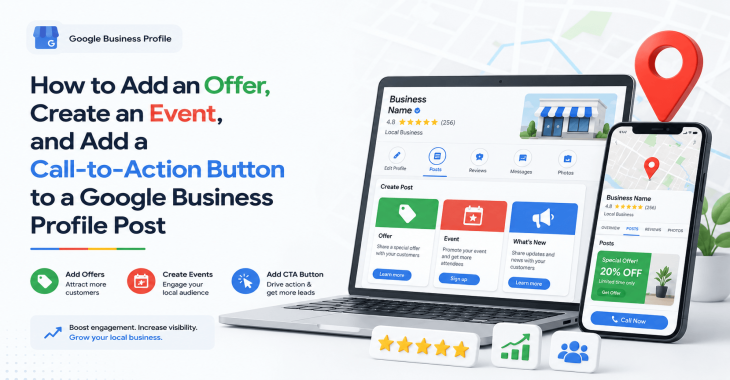
How to Add an Offer, Create an Event & Add a Call-to-Action Button to a Google Business Profile Post
- Kruti Varma /
- 2026-08-14 /
Google business profile posts give local businesses a fast way to share timely updates. This article covers how to add an offer, create an event, and include a call-to-action button in your Google business profile posts. You’ll learn practical steps, best practices, and how these features impact visibility and engagement for your google business profile posts.
Introduction
Google business profile posts are visible to people who find your business on Google Search and Maps. Each post can highlight a promotion, upcoming event, or a direct action. Proper use of offers, events, and CTAs can boost clicks and conversions from your profile.
This guide focuses on practical steps to create, customize, and optimize posts. You’ll find concrete, actionable instructions that apply to everyday management of google business profile posts.
READ MORE: Google Business Profile Optimization Guide (2026): Proven Tips to Rank #1 on Google Maps
Understanding the Post Types: Offer, Event, and CTA
- Offers: Aimed at promotions, discounts, or limited-time deals. They entice customers to take action within a short window.
- Events: Highlight upcoming activities with dates and times. They help drive attendance or registrations.
- Calls-to-Action: Buttons that prompt a specific action, such as booking, calling, or messaging.
Knowing the differences helps you decide which post type to use in a given scenario. Each feature appears in the post composer with distinct fields and prompts.
Preparing to Create an Offer in a Google Business Profile Post
Set clear goals for the offer
- Define the action you want customers to take (e.g., redeem a discount, sign up for a newsletter).
- Choose a reasonable expiration date to create urgency without sounding forced.
Build a compelling offer message
- Include the discount or benefit, the target product or service, and any applicable terms.
- Use concise language and a clear deadline that aligns with your business hours.
Visual and copy considerations
- Use a high-quality image that reflects the offer. Include your branding without clutter.
- Keep the headline and body text aligned with the offer terms to avoid confusion.
How to create an offer post
- Open the Google Business Profile manager.
- Navigate to Posts and select Offer.
- Enter a title that communicates the value (e.g., “20% Off Spring Cleaning Service”).
- Add details: discount amount, eligibility, expiration date, and any terms.
- Include a link or booking option if supported by your profile.
- Choose a CTA button, such as “Shop Now” or “Book” (see CTA section below).
- Publish and monitor performance metrics like views and taps.
Creating an Event in a Google Business Profile Post
Define event basics
- Include a clear event name, date, and start time.
- Add duration if applicable and a location (virtual events may require a link).
Describe the value and logistics
- State what attendees will gain and any registration requirements.
- Mention capacity limits, ticketing method, or how to join the event.
Visuals and reminders
- Upload an event-friendly image or banner.
- Consider a calendar-friendly date and time format to reduce ambiguity.
How to create an event post
- In Posts, choose Event.
- Enter the event name, date, and location.
- Add a short description highlighting what attendees will learn or experience.
- Include a link to registration or a calendar invite if available.
- Add a CTA button like “Learn More” or “Register.”
- Publish and track engagement (views, saves, shares).
READ MORE: How to Rank on Google Maps: Proven Local SEO Strategies
Adding a Call-to-Action Button to a Google Business Profile Post
Choose the right CTA for your objective
- Learn more: Directs users to a landing page with details.
- Book: Encourages appointment scheduling or reservations.
- Call now: Initiates a phone call.
- Shop: Points users to a product page or catalog.
- Sign up: Improves newsletter or account creation.
- Send message: Opens a chat or messaging window.
Placement and visibility
- Position the CTA in the post’s bottom area where users expect action prompts.
- Align the CTA with the post type (offers, events, or general updates).
How to add a CTA button
- During post creation, select the CTA option.
- Choose from available button labels to match your objective.
- Link the CTA to a relevant URL, booking form, or contact method.
- Save changes and publish. Monitor performance by clicking-through rates and user actions.
Best Practices for Google Business Profile Posts
Consistency and cadence
- Post regularly to maintain visibility, but avoid posting too frequently in a short window.
- Align post timing with business hours and promotions.
Clear value and urgency
- Offers should clearly state the discount, deadline, and eligibility.
- Events should emphasize value, date, and registration steps.
Compliance and accuracy
- Ensure terms and conditions are accurate and easy to understand.
- Avoid misleading language or false scarcity to protect trust.
Visual quality
- Use crisp images and legible text overlays.
- Maintain brand consistency in colors and typography.
READ MORE: How to Post on Google Business Profile: Complete Step-by-Step Guide
Troubleshooting Common Issues
Post not appearing in search results
- Verify that the profile is verified and the post type is supported in your region.
- Check if the post was published and not saved as a draft.
CTA button not functioning
- Confirm the linked URL is active and accessible.
- Ensure the destination page loads quickly and is mobile-friendly.
Editing after publishing
- Edit posts to adjust details, but avoid removing an offer or event too soon, which may confuse customers.
Measuring Success of Google Business Profile Posts
Key metrics to monitor
- Impressions: How many times the post appeared in search results.
- Engagement: Clicks on the post, including CTA interactions.
- Actions taken: Bookings, calls, messages, or other conversions.
- Traffic to destination pages: Referrals from the post to your site or landing page.
Using insights to refine strategy
- Compare performance across offers, events, and general posts.
- Adjust messaging, visuals, or timing based on what resonates with your audience.
Integration with Other Marketing Channels
Cross-promotion ideas
- Promote your Google business profile post on social media with a direct link.
- Include a reference in email newsletters to drive profile traffic.
- Use UTM parameters in linked destinations to track performance in analytics tools.
Coordinating offers and events
- Align discounts with ongoing promotions on your website to avoid customer confusion.
- Schedule events with other marketing channels to maximize attendance.
READ MORE: How to Do Google Maps SEO: Complete Step-by-Step Guide
Advanced Tips for Power Users
Template approach for recurring promotions
- Create a reusable offer template with fields for discount, dates, and terms.
- Duplicate and update templates for seasonal campaigns.
Localized optimization
- Tailor offers and events to neighborhoods or city-specific audiences.
- Use language that reflects local preferences and holidays.
Accessibility considerations
- Ensure text contrasts well against backgrounds.
- Provide alt text for images to accommodate accessibility standards.
Practical Workflows for Teams
Roles and responsibilities
- Marketing: Craft the messaging and visuals.
- Social media manager: Publish and monitor posts.
- Analytics: Track performance and report findings.
Approval processes
- Establish a quick review loop to prevent last-minute errors.
- Use checklists before posting to ensure all fields are complete.
READ MORE: How Often Should You Post on Google Business Profile? (2026 Guide)
Conclusion or Takeaways
Google business profile posts offer targeted ways to present offers, promote events, and drive direct actions through CTAs. Use clear messaging, strong visuals, and carefully chosen CTAs to increase visibility and engagement. Regularly review performance metrics and refine your approach based on what resonates with your local audience.
Recent Blogs
-
Why Is My Website Page Not Indexed by Google? 12 Reasons & How to Fix It
Posted ::2026-09-24
-
How to Request Indexing of a Website Page on Google?
Posted ::2026-09-19
-
Google Search Console Guide 2026: Complete Beginner’s Guide
Posted ::2026-09-18
-
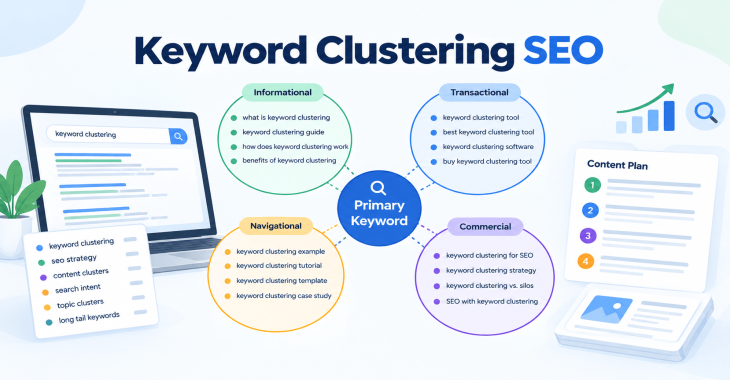
Keyword Clustering SEO: How to Group Keywords for Better Rankings
Posted ::2026-09-12
-
SEO Audit Checklist: 50+ Steps to Audit Your Website
Posted ::2026-09-11


Our FAQ’s
What is digital marketing?
Digital marketing involves marketing to people using Internet-connected electronic devices, namely computers, smartphones and tablets. Digital marketing focuses on channels such as search engines, social media, email, websites and apps to connect with prospects and customers.
What does a digital marketer do?
Digital marketing has evolved to the point where an immense array of specialists consult with brands to develop effective strategies or implement programs. If you’re new to digital marketing, or lack experience or resources, you should consider engaging an experienced and versatile digital marketing consultant.
Would my business benefit from digital marketing?
Definitely. Though companies in many business categories continue to approach digital marketing with skepticism, avoiding digital marketing denies your business access to the media the majority of consumers turn to first and at all hours of the day.
What’s the biggest mistake digital marketers make?
Blowing their own horn. Yes, of course, the primary goal of marketing is to create leads. However, in the age of digital media a brand-centric, salesy approach deflects interest in your company. Make your marketing customer-centric. Second biggest mistake: Far too often, digital marketers start and stop. You need to contribute a steady flow of content to the channels you use.
How often should I update my website?
Websites that go for long periods with no updates and new content are unlikely to perform well or support any useful digital marketing objectives. Though a static website technically qualifies as a website it’s bound to be more than a digital brochure that produces little or no leads.
What do I need to know about mobile?
Mobile phones are the most used technology in the world. Most of your prospects spend the majority of their media time—and hours—using a smartphone. Mobile marketing focuses on mobile strategies like messaging, mobile applications, and mobile websites. A brand that ignores mobile marketing is doomed.
What is content marketing?
Content marketing is the creation and distribution of educational and/or entertaining information assets for the purpose of generating brand awareness, traffic, leads and sales. Marketing content is generally free and does not explicitly promote your brand as an ad would.
What’s involved in creating a content marketing strategy?
A content marketing strategy is a plan for building an audience. Elements of content marketing strategy include establishing objectives, audience personas, a value proposition, content marketing mission statement, a buyer journey map, and plans for creating, promoting and analyzing how content marketing assets and programs perform.
Do I need a blog?
Email, social media, search and other elements of your digital marketing mix will depend on delivering useful content. Though video outlets, podcasts, and media galleries present other options, a blog is by far the most used tactic for distributing marketing content on a channel over which you have complete control.
What content should we create?
There can be no all-encompassing answer to this question except to say you should create content buyers will find relevant and useful. Leading candidates include blog posts, articles, ebooks, infographics, microsites, videos, courses, case studies, newsletters, visuals and various forms of interactive content.
What is SEO?
Search engine optimization (SEO) is the process of using onsite and offsite tactics to help get content presented by a search engine. Done well, the practice increases the quantity and quality of your traffic.
Why is SEO important?
The majority of web traffic is generated by search and those that come by way of search have a greater degree of commercial intent than most other channels.
What is local SEO?
Local SEO is the process of optimizing your online properties to generate traffic from location-based searches. It helps businesses promote products and services to local customers when they need them.
What are keywords?
Keywords are the words and phrases searchers use—usually with search engines—to find relevant pages, images, videos, or any kind of information when looking for answers, knowledge, products, or services. SEO professionals consider keywords and the topics they suggest when optimizing content for search.
What determines search engine rankings?
This question is the source of endless speculation and debate because search engine companies such as Google will not answer it. Experts generally agree rankings are based on relevance and authority, but the factors that determine them are many—and inconsistent. The best way to achieve a high search engine ranking is to create one of the most thorough web pages possible for a specific keyword or topic.
What is PPC?
PPC stands for pay-per-click. Essentially, it’s a way of buying web traffic. Advertisers pay a fee each time one of their ads is clicked. Search engine advertising is the most popular form of PPC, however numerous channels including Facebook now offer PPC ad models.
Why is social media important?
Chances are your audience is active on one or more of the major social networks where billions of people spend time daily. Brands that understand the power of social media marketing and commit resources to it can boost awareness, drive traffic, interact with customers, drive sales, build loyalty, and win advocates.
What is a lead magnet?
A lead magnet is a free offer you make in exchange for an email address (and possibly additional information). The purpose is to inspire prospects to join your email list by offering something of value. Examples include an ebook, guide, report, assessment, cheat sheet, tool, template, webinar, course, or a coupon.
What is a call to action?
A call to action (CTA) is a prompt that instructs the viewer to take a specific action. A call to action is typically written as a command, such as “Buy Now.” In digital marketing a CTA generally takes the form of a button or link.
How long does it take to see results?
Paid digital marketing programs should create results immediately. On the other hand, programs such as content marketing, email list building, and search engine optimization require persistence and patience. You might see some results in a matter of months; however, it’s likely to be six months to a year before you realize some of your traffic and conversion objectives.